The World XXI
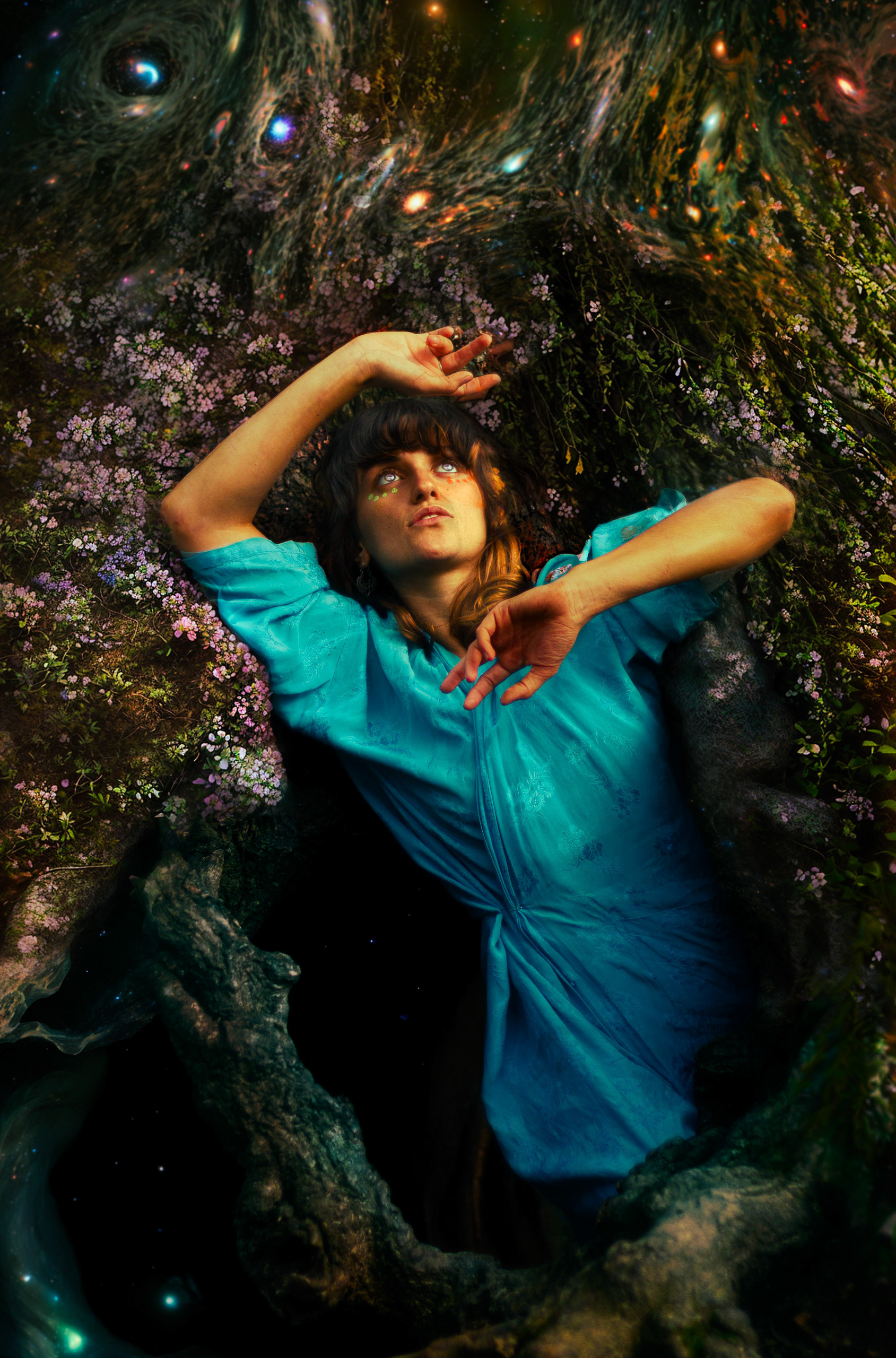
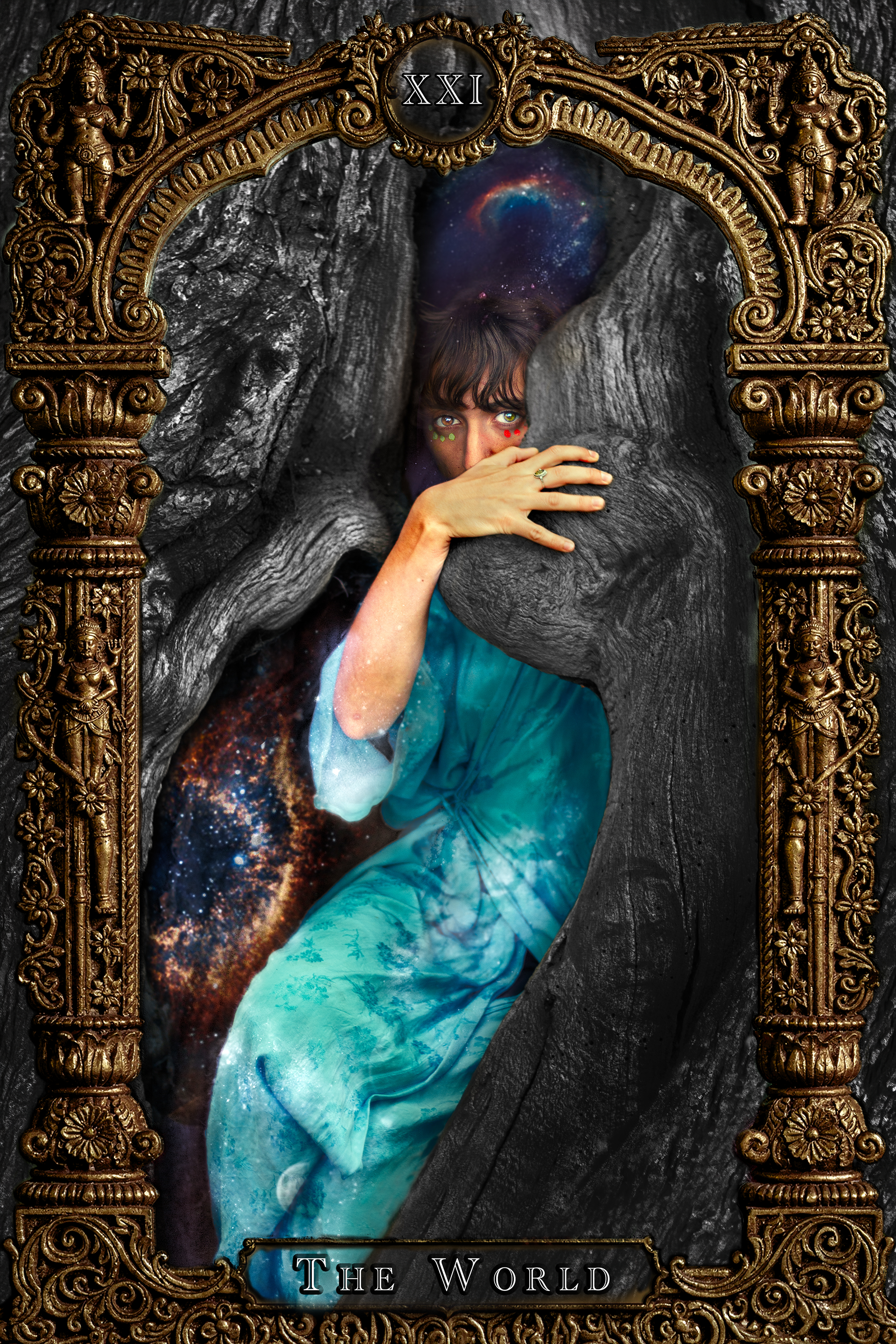
If the banyan tree of history could speak, would it whisper the names of the silenced, or would it reveal that the roots themselves are made of the women we chose to forget?
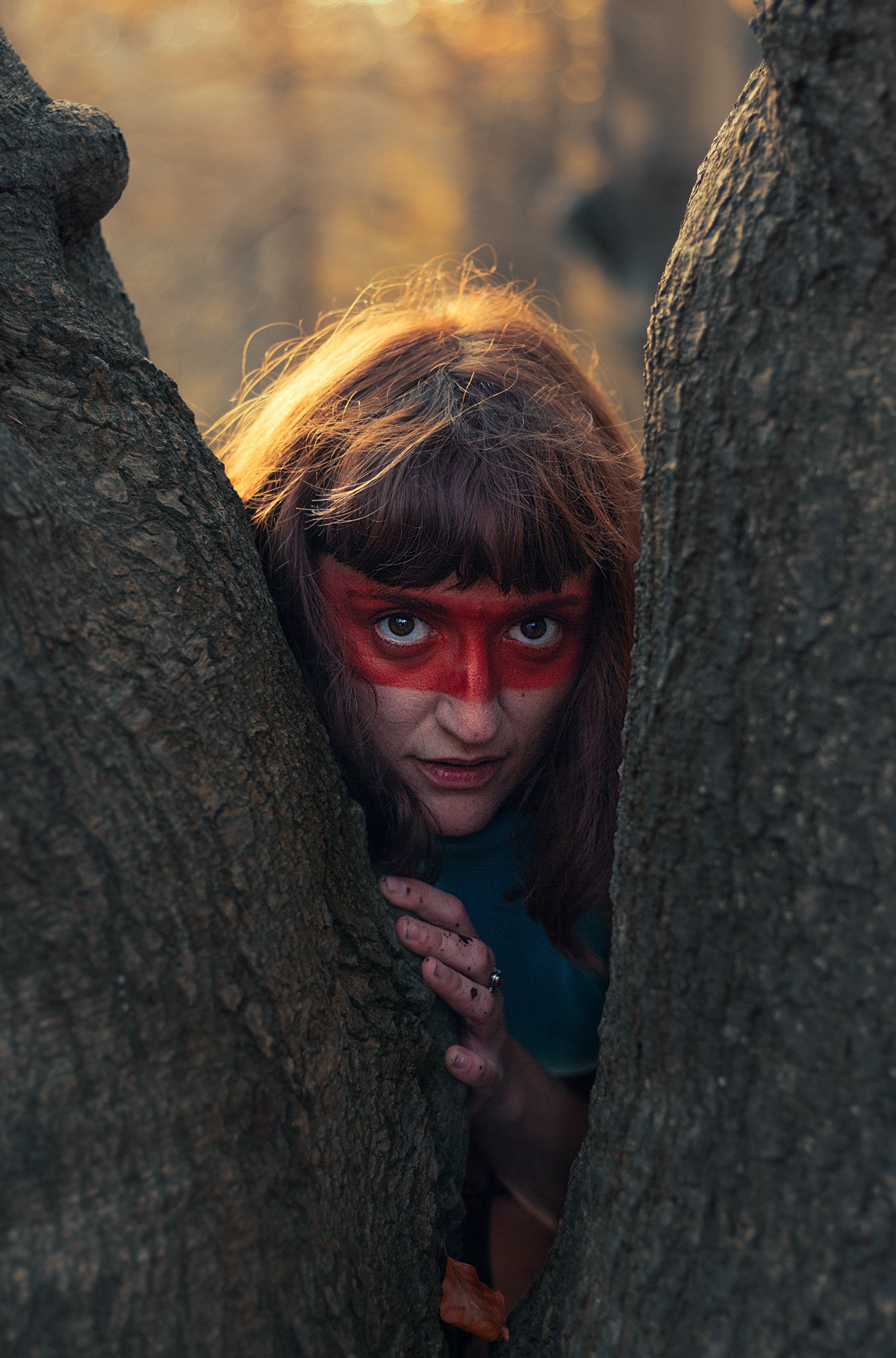
We look at this world, a sprawling web of appearances, and we forget the unseen labour that holds it upright. In the tarot, The World is the final stage of the journey—the ultimate synthesis of completion, wholeness, and spiritual fruition. Yet, true completion is never a solitary act. It is a collective inheritance, a heavy, sacred fruit ripened by the ancestors who tore through the veil of colonial constraints to breathe life into the future.
These four revolutionary women, woven into the very bark of the tree, are not mere figures in a landscape; they are the living sap. They embody the paradox of the Tripura Rahasya—that the observer and the observed are one, and the history we perceive is merely the reflection of the spirit’s own unfolding. Like the Namboodiri women who broke the silence of the smarthavicharam or the rebels who dared to redefine inheritance, these figures teach us that surrender is not weakness. It is the ecstatic surrender of the ego to the collective truth.
They are the hidden weight beneath our feet. They are the ones who refused to be defined by the domestic hearth, choosing instead to ignite the fires of social transformation. To see them is to realise that the 'world' we inhabit is held together by the quiet, unrelenting defiance of those who came before us. We are, in every sense, standing on the shoulders of giants who never asked for pedestals—only for justice.
These four revolutionary women, woven into the very bark of the tree, are not mere figures in a landscape; they are the living sap. They embody the paradox of the Tripura Rahasya—that the observer and the observed are one, and the history we perceive is merely the reflection of the spirit’s own unfolding. Like the Namboodiri women who broke the silence of the smarthavicharam or the rebels who dared to redefine inheritance, these figures teach us that surrender is not weakness. It is the ecstatic surrender of the ego to the collective truth.
They are the hidden weight beneath our feet. They are the ones who refused to be defined by the domestic hearth, choosing instead to ignite the fires of social transformation. To see them is to realise that the 'world' we inhabit is held together by the quiet, unrelenting defiance of those who came before us. We are, in every sense, standing on the shoulders of giants who never asked for pedestals—only for justice.
ചരിത്രത്തിന്റെ വേരുകളിൽ ഒളിഞ്ഞുകിടക്കുന്ന വിപ്ലവത്തിന്റെ മുഖങ്ങൾ.
[Charithrathinte verukalil olinjukidakunna viplavathinte mukhangal.]
(The faces of revolution hidden in the roots of history.)
[Charithrathinte verukalil olinjukidakunna viplavathinte mukhangal.]
(The faces of revolution hidden in the roots of history.)
The Empress
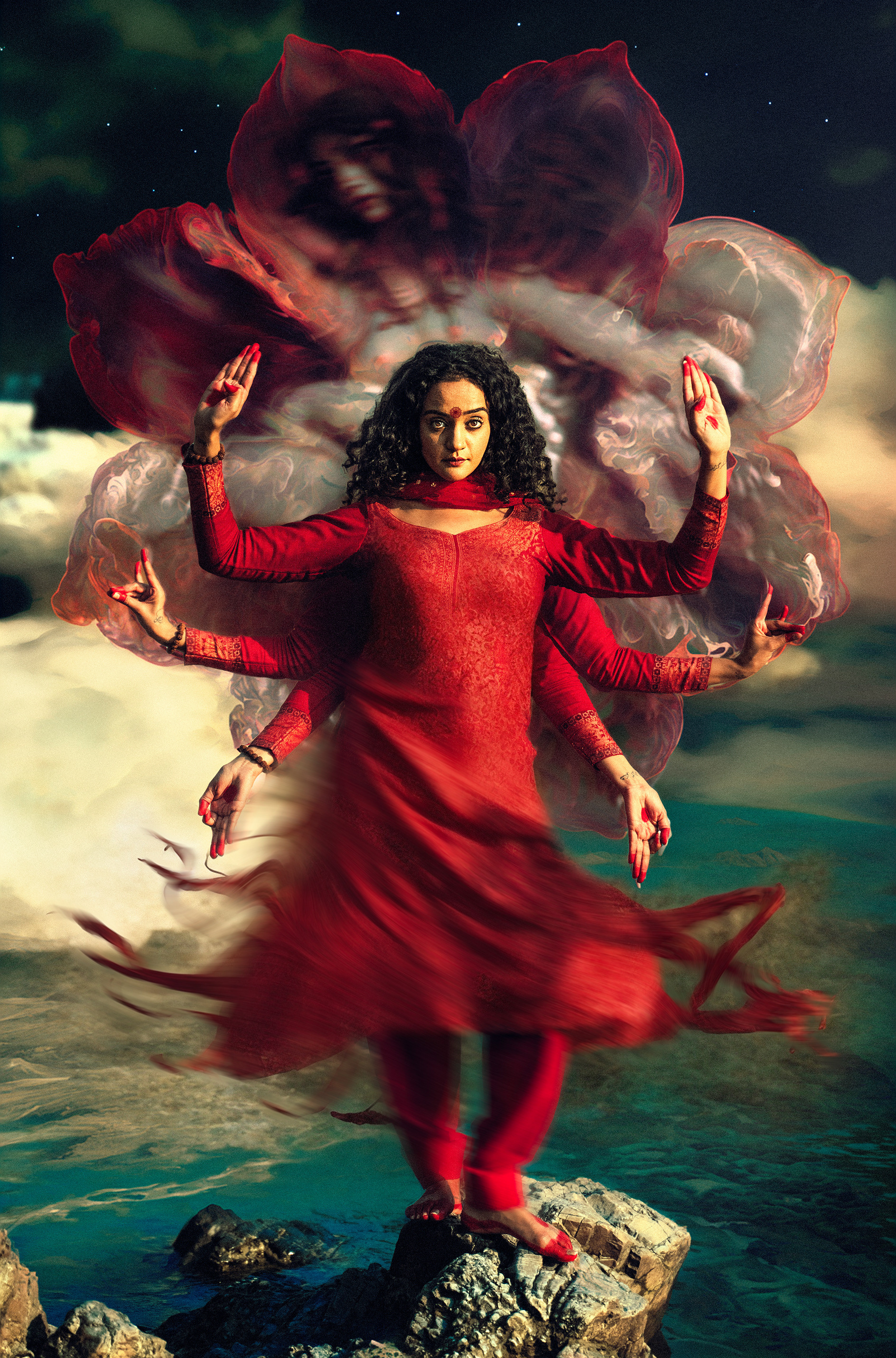
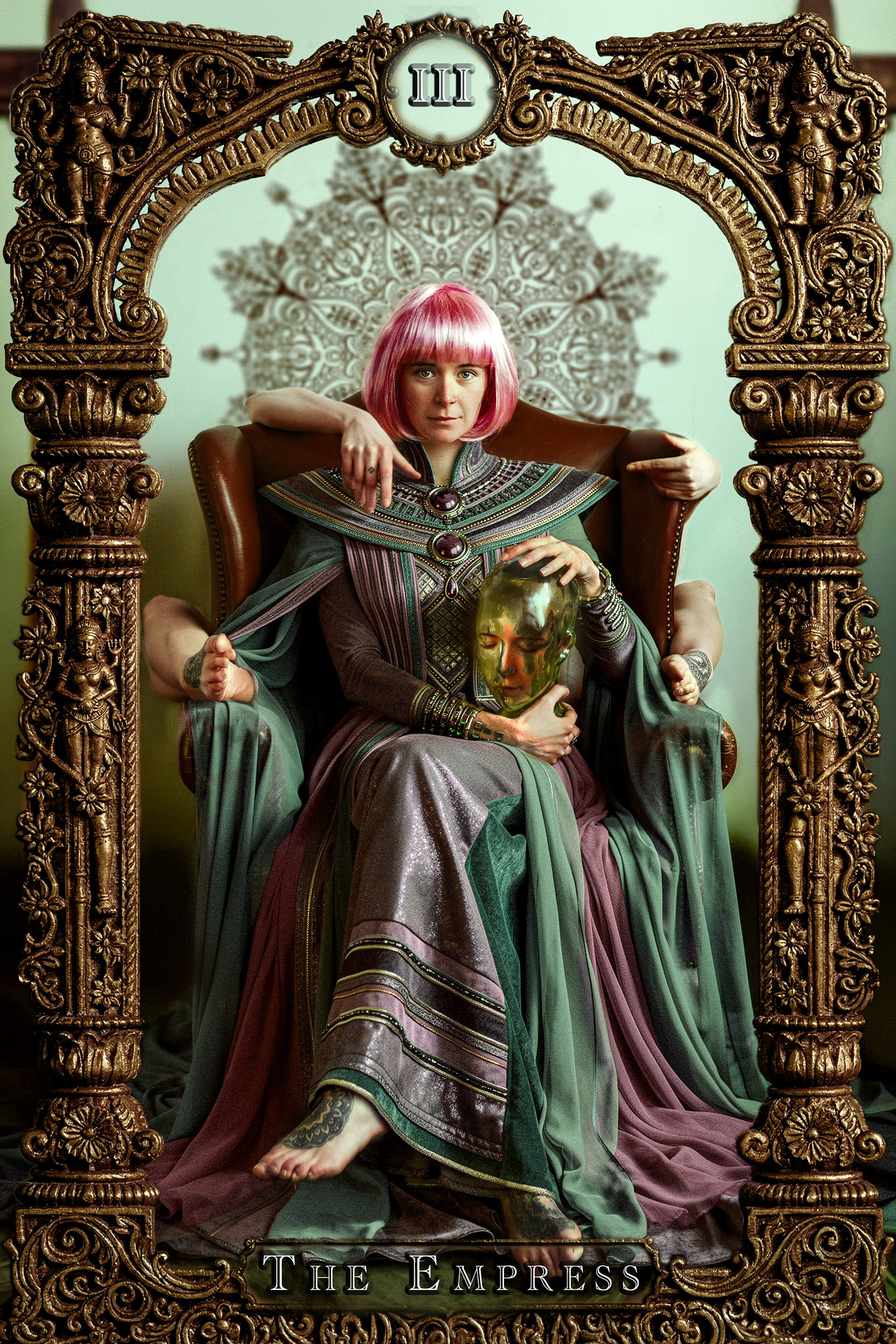
If you could hold your own consciousness in your hands, would you recognise the face of the one who birthed your thoughts?
The Empress is not merely a card; she is the Prakriti—the primordial creative force that weaves the fabric of the material world. Like the Devi described in the Tripura Rahasya, she is both the mirror and the reflection. She sits within the ornate cage of tradition, yet her pink-hued crown signals a rebellion of the soul. She is the mother of all things, yet she remains a seeker, cradling a translucent version of her own ego as if to ask: “Is this all I am?”
In this space, we find the "ecstatic surrender" Rumi spoke of—a surrender not to a deity, but to the multiplicity of our own nature. The extra limbs are not deformities; they are the many ways we reach out to touch the divine in the mundane. It is the "cosmic intimacy" of Tagore meeting the "visceral honesty" of a humid Kerala afternoon. We are at once the architect of the frame and the prisoner of the pose.
To look upon the Empress is to witness the "integral vision" of Aurobindo. She represents the abundance that comes from understanding that the self is a transparent vessel. She does not just inhabit the throne; she defines the gravity that keeps the throne from floating away into the void of the unmanifested.
അധികാരം എന്നത് മറ്റുള്ളവരെ ഭരിക്കലല്ല, സ്വന്തം ആത്മാവിനെ കണ്ടെത്തലാണ്.
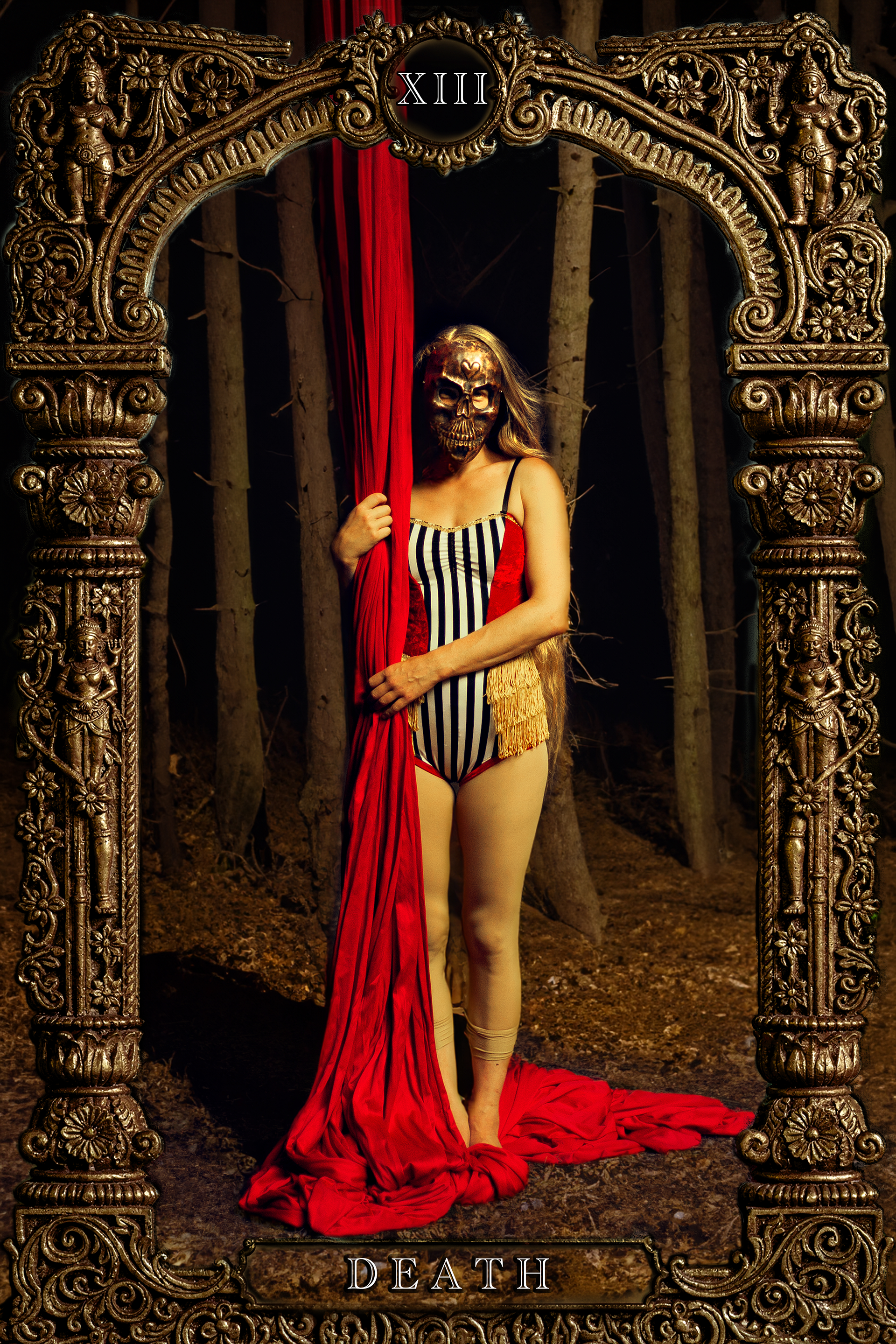
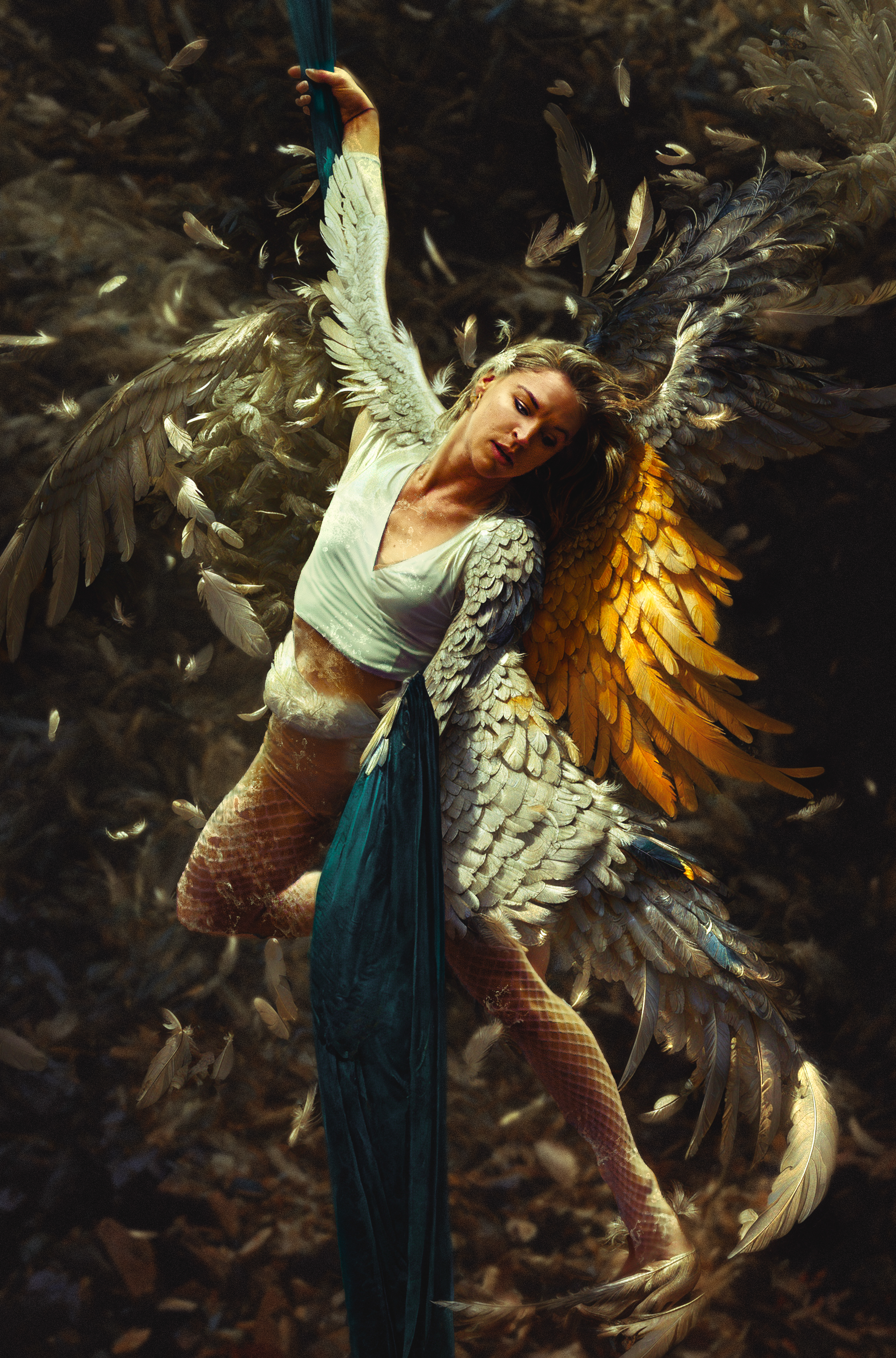
Death
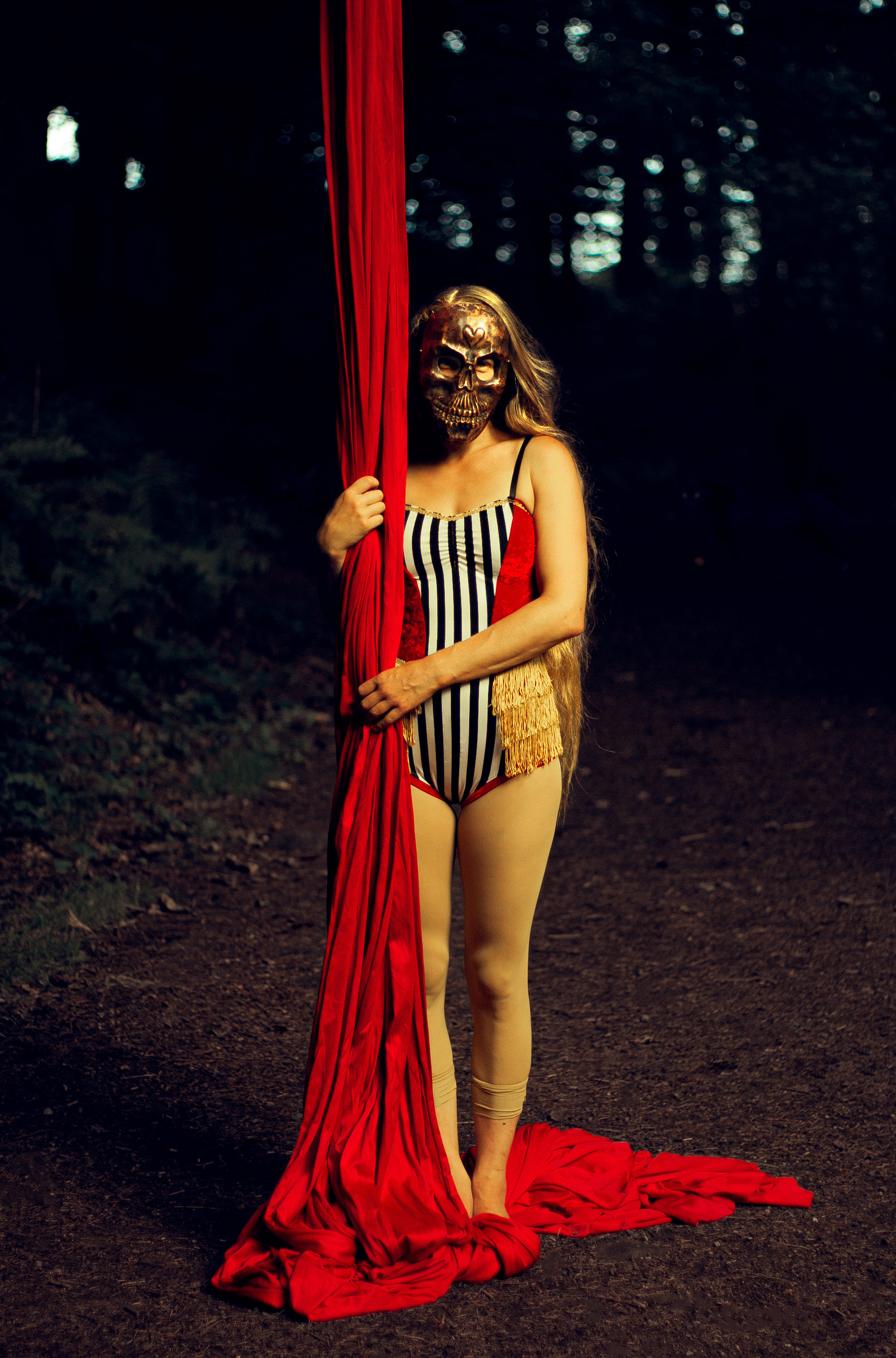
If you were to meet the end of your current self in a forest of shadows, would you recognise her as a stranger, or as the one who has been holding the curtain open for you all along?
We fear the thirteenth card because we mistake the closing of a door for the end of the hallway. As Yogananda taught, change is the only bridge to the changeless state. To die is not to vanish; it is to shed the striped costume of the ego—the persona we perform in the grand circus of Maya—and stand naked before the infinite. As the "Sultan of Love" Rumi whispered, we must keep "breaking our hearts until they open." This image is that precise moment of the crack.
The red silk is not a shroud, but an umbilical cord. It represents the life-force (Prana) that remains vibrant even as the mask of the skull suggests decay.
In the silence of the Tripura Rahasya, we find that the seer, the seeing, and the seen are one. Here, the "Death" figure is not an executioner, but a divine stagehand, pulling back the heavy velvet of material reality to reveal the liminal woods of the soul. It is a surrender that feels less like a defeat and more like a homecoming—visceral, honest, and slightly wild.
പഴയത് മരിക്കട്ടെ, പുതിയത് ജനിക്കട്ടെ; മാറ്റം മാത്രമാണ് ശാശ്വതം.
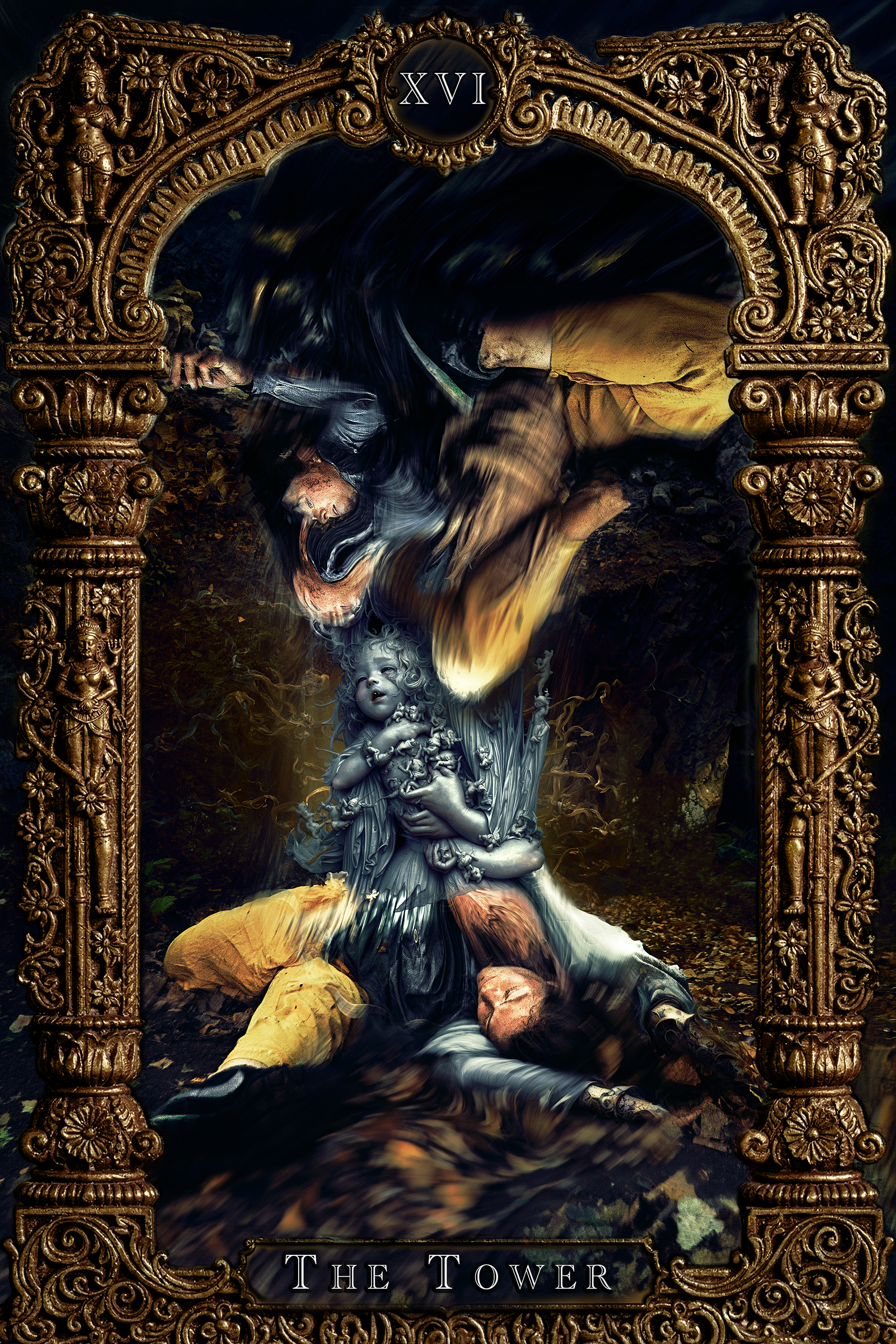
The Tower
When the architecture of your certainty finally cracks, do you mourn the ruins, or do you breathe in the sudden, terrifying vastness of the sky?
As Tagore whispered to the cosmic silent, we must let the old life go to make room for the new rhythm. Do not fear the fire that burns away the dross; it is only preparing the soil for a more integral vision. Surrender is the highest form of rebellion.
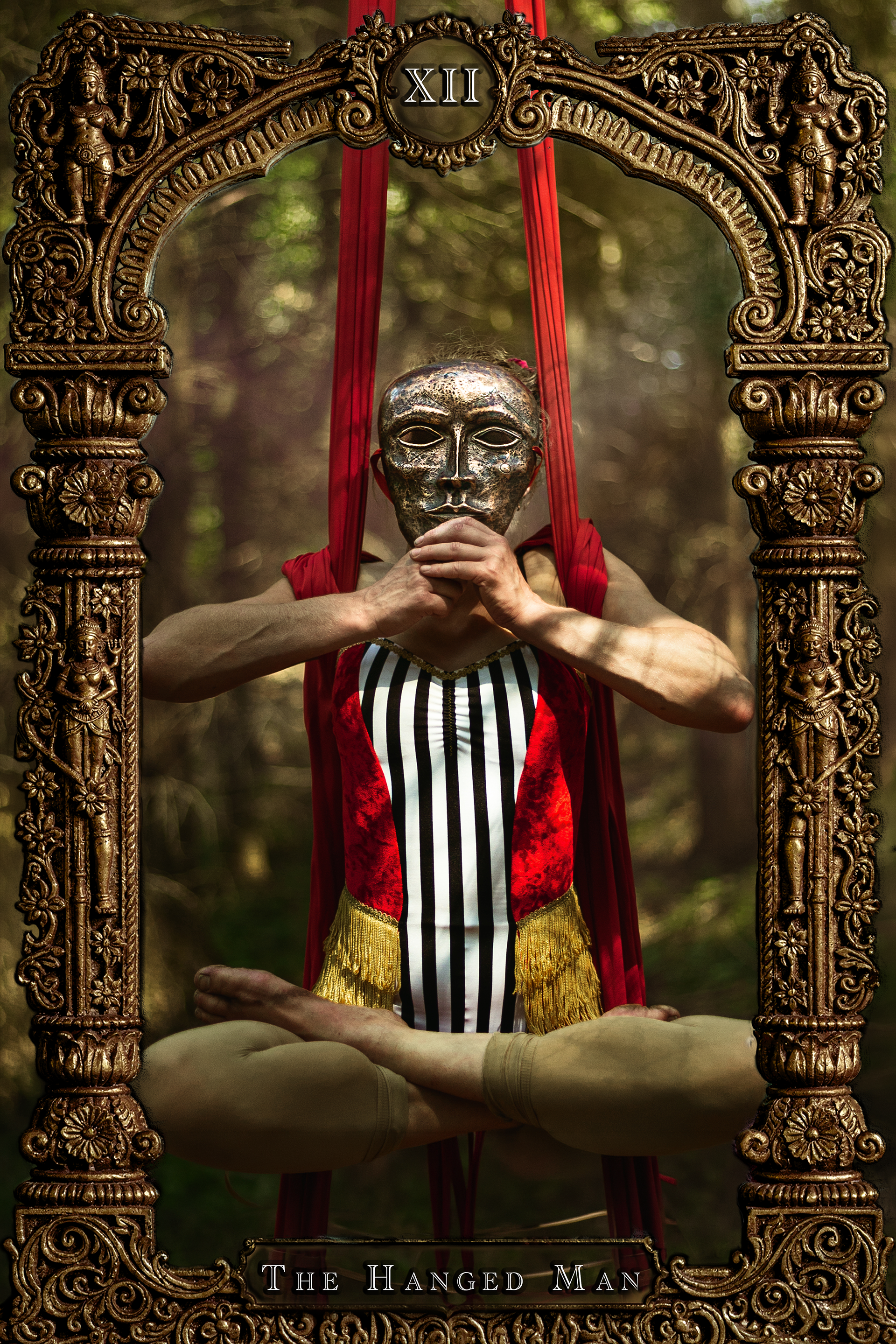
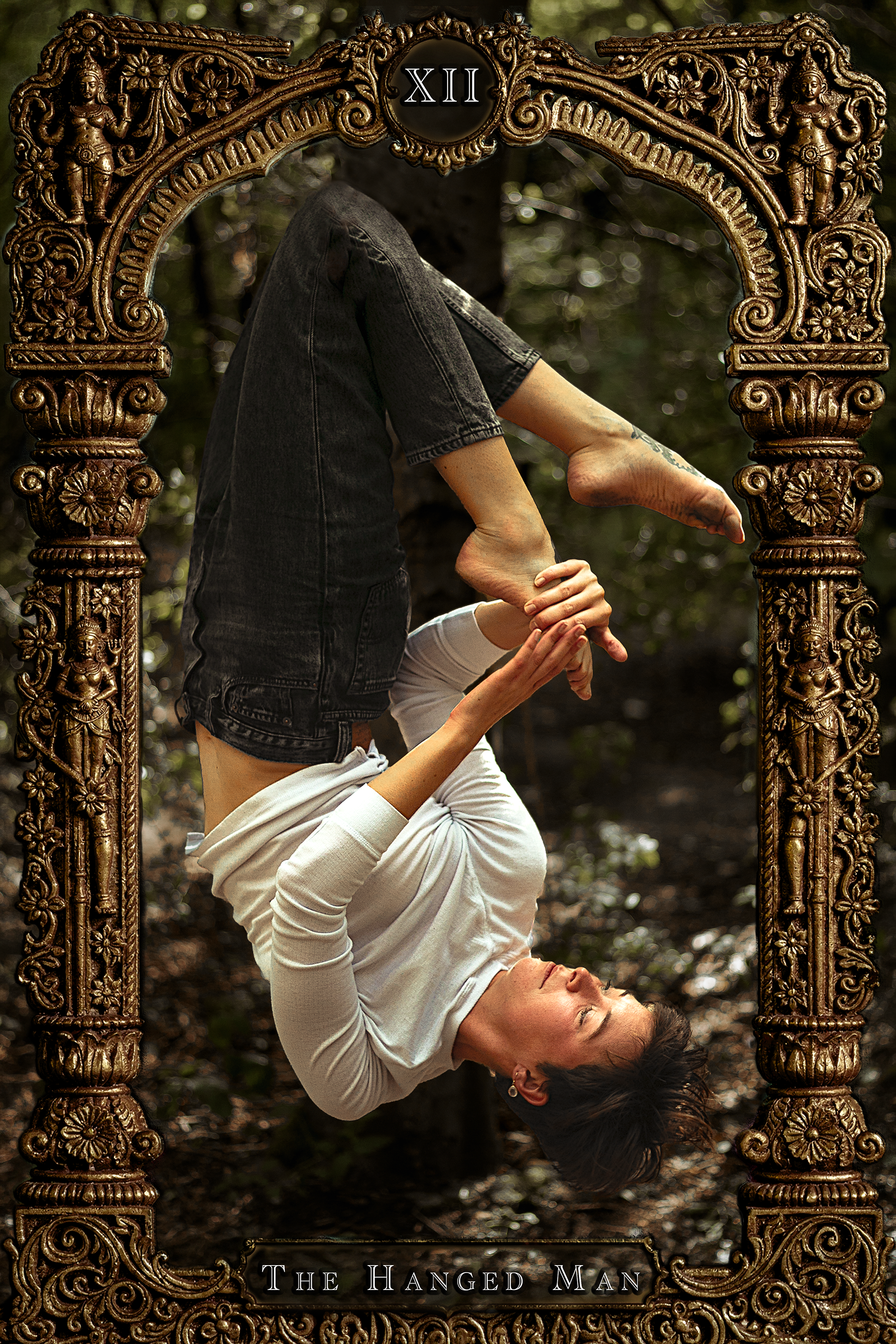
The Hanged Man
If the world flipped on its axis tomorrow, would you finally see the truth, or would you simply close your eyes to keep the horizon straight?
In the theatre of the divine, we are often suspended—neither of the earth nor of the sky. This interpretation of The Hanged Man (XII) is not an act of punishment, but a radical surrender to the "Great Pause." It is the moment where the intellect ceases its frantic chatter and the soul begins to observe. We hang by the crimson silks of our own desires, yet our hands are folded in a mudra of quiet acceptance.
To see the cosmos clearly, one must occasionally view it upside down. It is the ecstatic surrender Rumi spoke of—the realisation that falling is actually flying when you finally let go of the branch. The mask we wear is not a shield, but a consecrated face for the ritual of transformation. In this suspension, the ego thins, and the "Self" (Atman) expands into the quiet forest of the subconscious that binds us all.
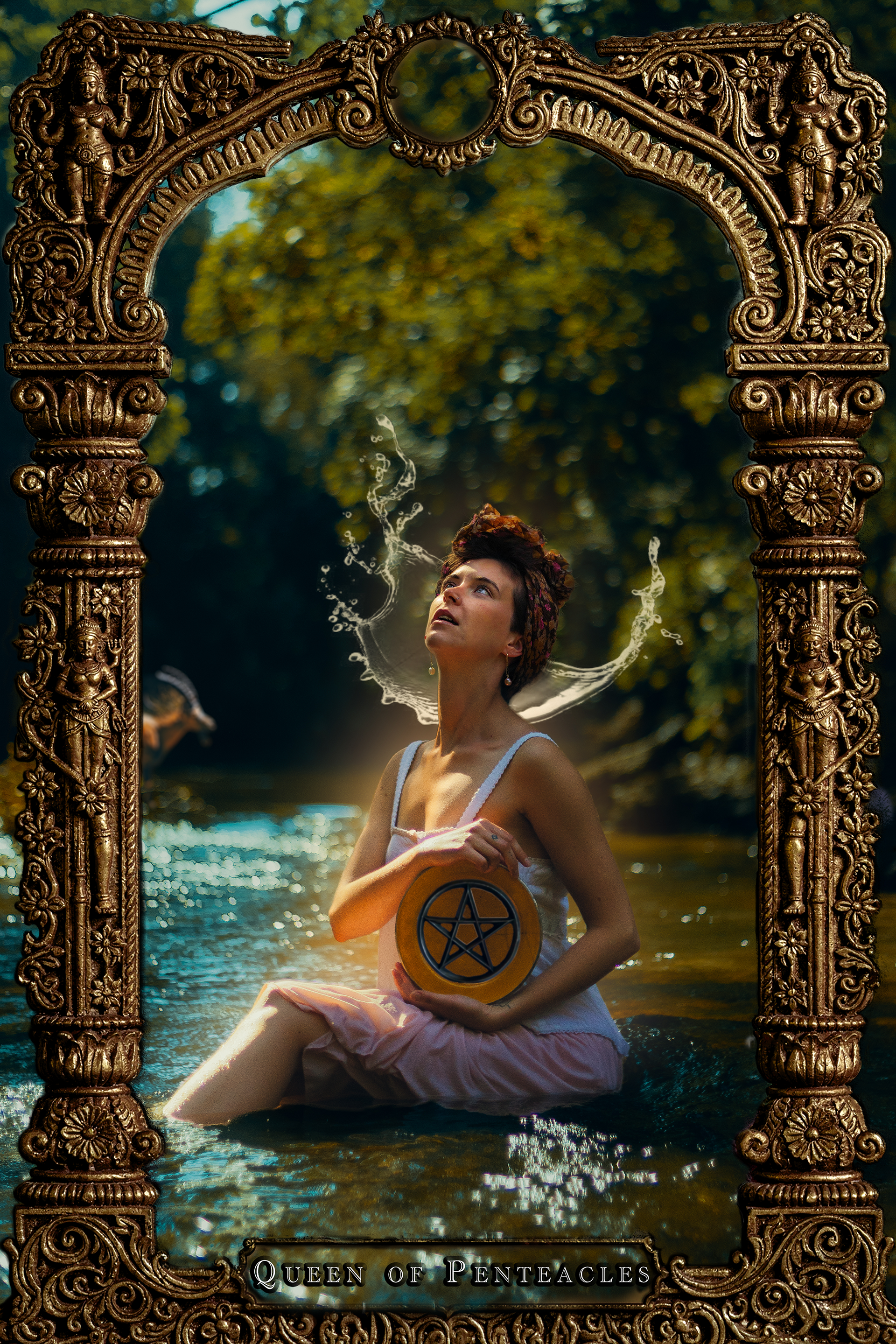
Queen of Pentacles
If your soul were a sanctuary of soil and stream, would you dare to sit still enough to hear the heartbeat of the earth?
The Queen of Pentacles is not merely a figure of wealth; she is the embodiment of Prakriti—the primal creative energy of nature, grounded and overflowing. To hold the pentacle is to acknowledge that the material world is but a condensed vibration of the spiritual. As Yogananda taught, "The season of failure is the best time for sowing the seeds of success." Here, she sits in the flow, not fighting the current, but becoming its throne.
“True abundance isn't what we hoard, but how deeply we are rooted in the ‘Now." “
The Magician
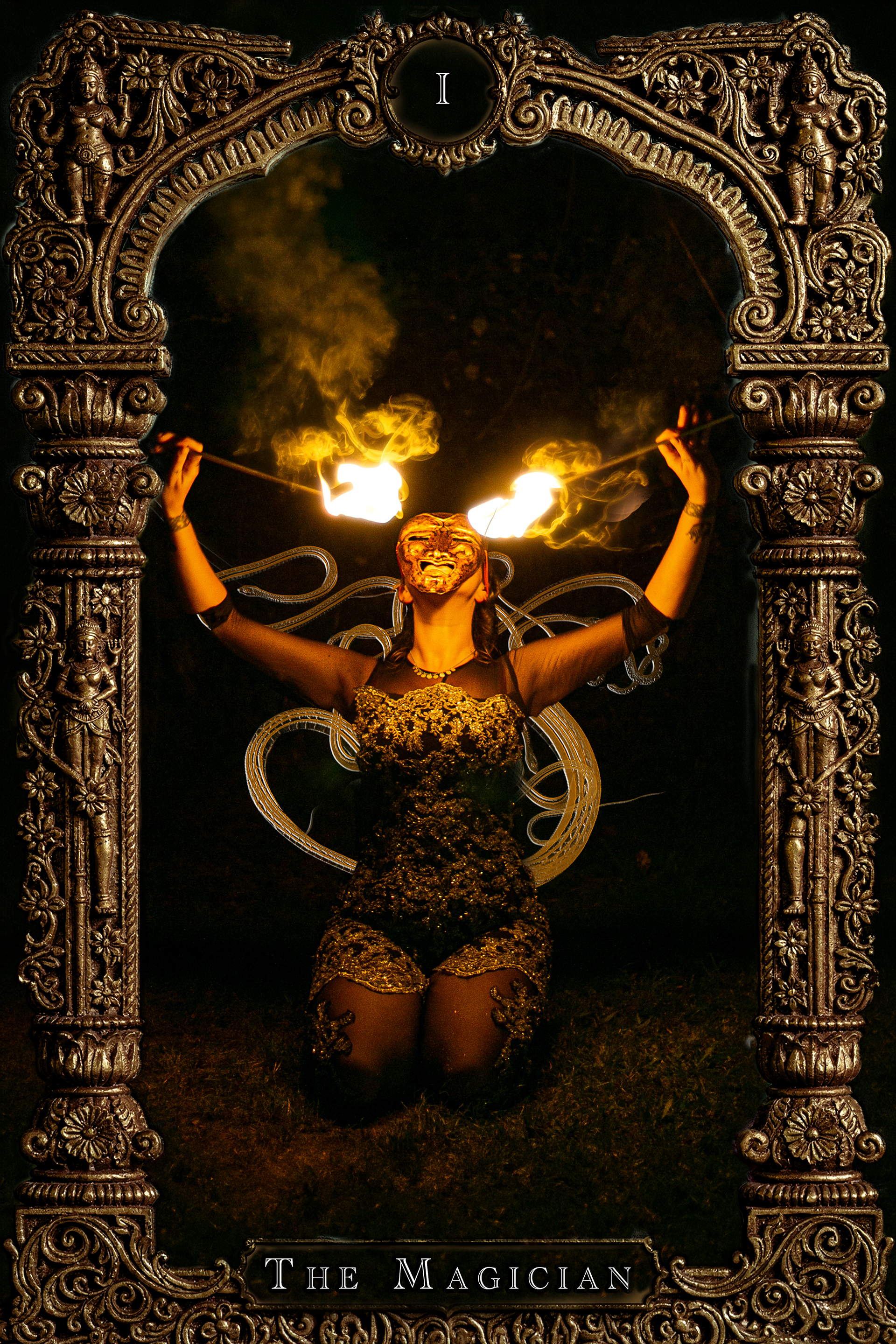
If you could command the very fire that threatens to consume you, would you still fear the dark?
We often view the ego as a solid mask, a fixed identity we wear to navigate the world. But in the alchemy of the soul, the mask is merely a vessel for the fire. Like the Magician of the Tarot, we stand at the crossroads of the elements—holding the twin staves of willpower, channelling the celestial spark into the terrestrial plane.
The snakes that coil behind are not symbols of malice, but of Kundalini—the primal, dormant energy of creation. To be "Snakey Flakey" is to acknowledge the shedding of old skins. It is the ecstatic surrender Rumi spoke of: "Respond to every call that excites your spirit." We are not just the observers of the flame; we are the conduit through which the infinite expresses its heat.
In the silence of this ritual, the boundary between the performer and the performance dissolves. As the Upanishads remind us, the seeker and the sought are one. When you stop resisting the smoke, you finally learn to breathe the light.
The snakes that coil behind are not symbols of malice, but of Kundalini—the primal, dormant energy of creation. To be "Snakey Flakey" is to acknowledge the shedding of old skins. It is the ecstatic surrender Rumi spoke of: "Respond to every call that excites your spirit." We are not just the observers of the flame; we are the conduit through which the infinite expresses its heat.
In the silence of this ritual, the boundary between the performer and the performance dissolves. As the Upanishads remind us, the seeker and the sought are one. When you stop resisting the smoke, you finally learn to breathe the light.
അഗ്നിയെ ഉള്ളിലൊളിപ്പിച്ച മാന്ത്രികൻ, നിഴലുകൾക്കിടയിൽ തൻ്റെ ആത്മാവിനെ തിരയുന്നു.
(Agniye ullilolippicha manthrikan, nizhalukalkkidayil thanne aathmavine thirayunnu.)
(Agniye ullilolippicha manthrikan, nizhalukalkkidayil thanne aathmavine thirayunnu.)
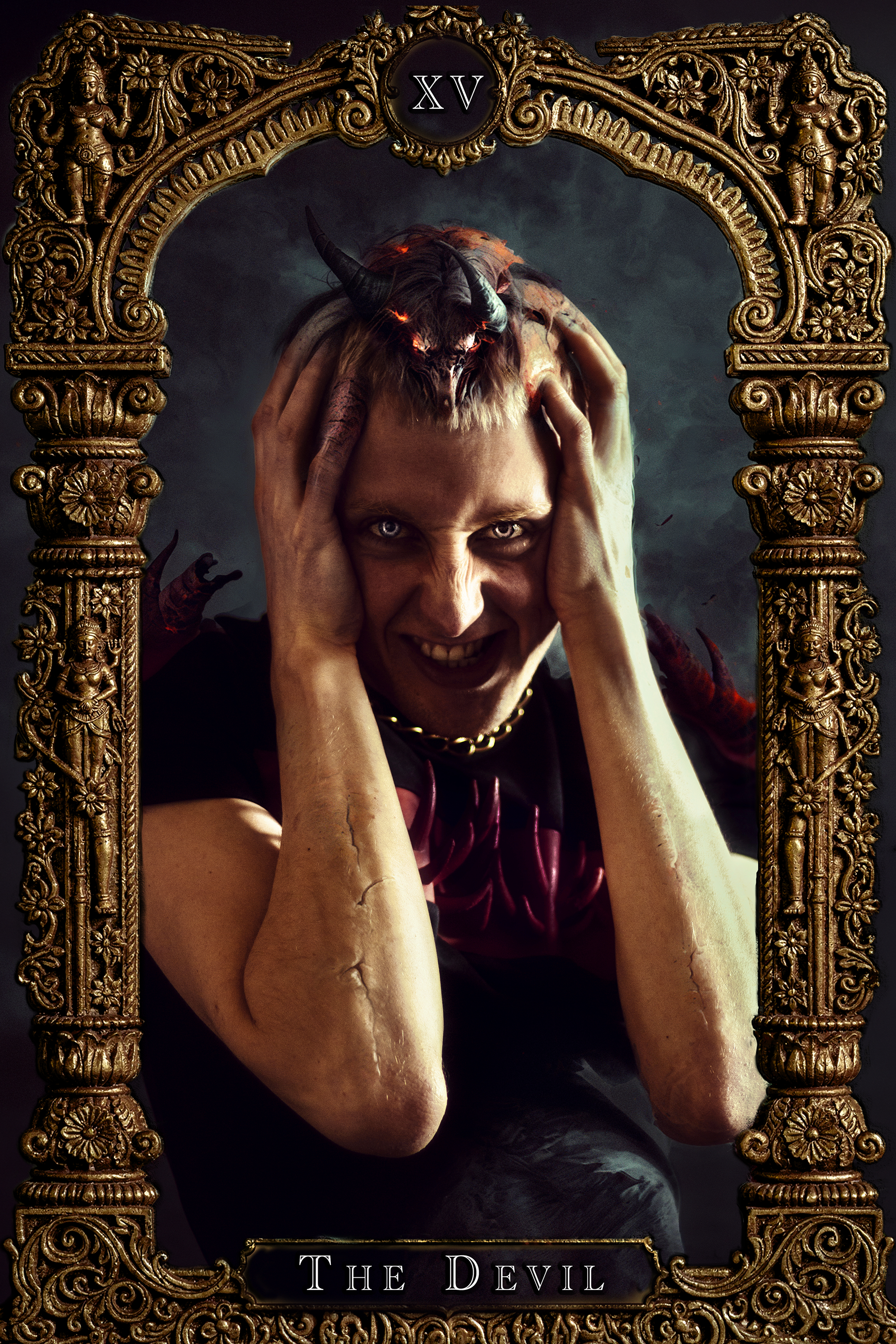
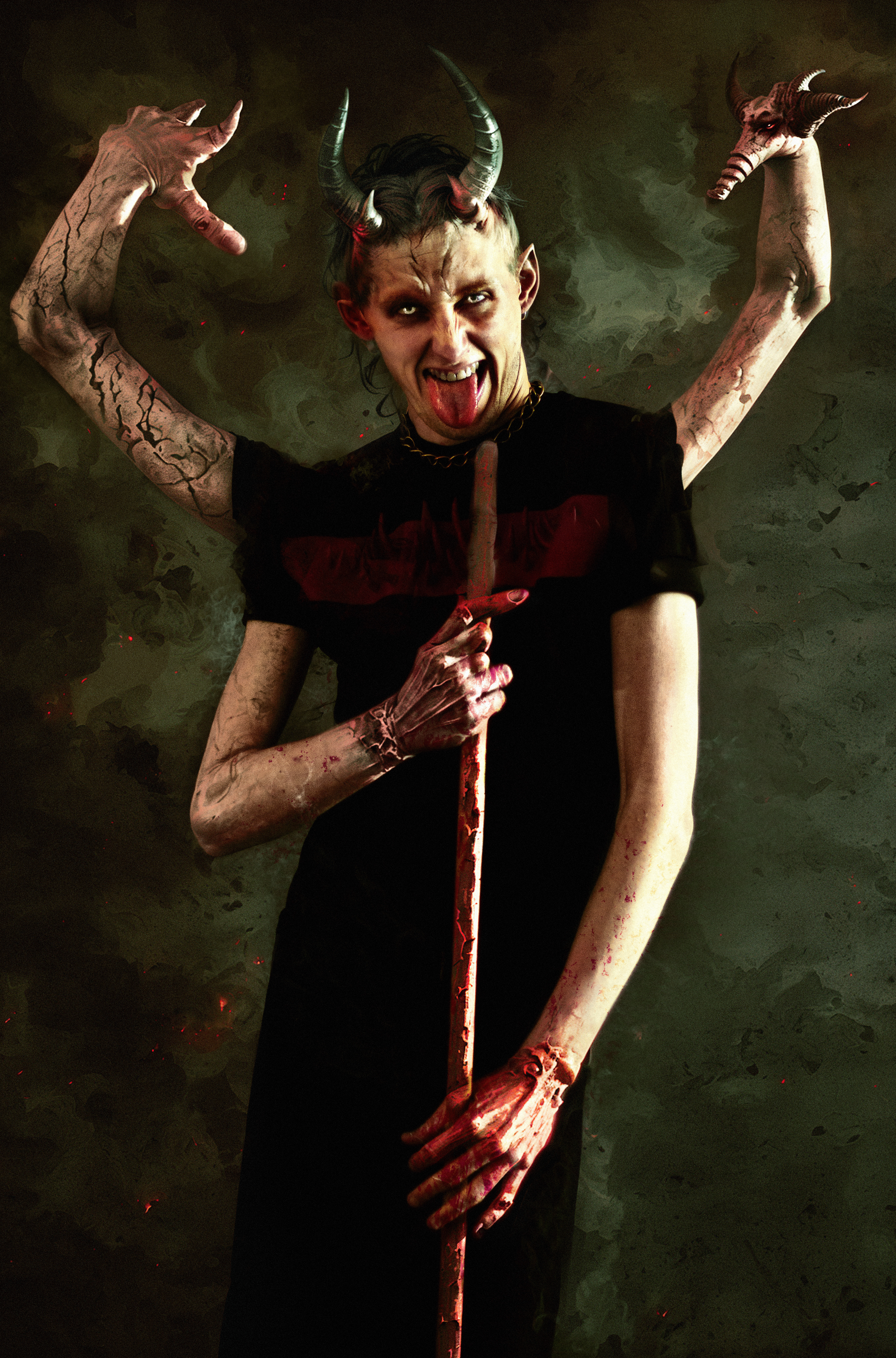
The Devil
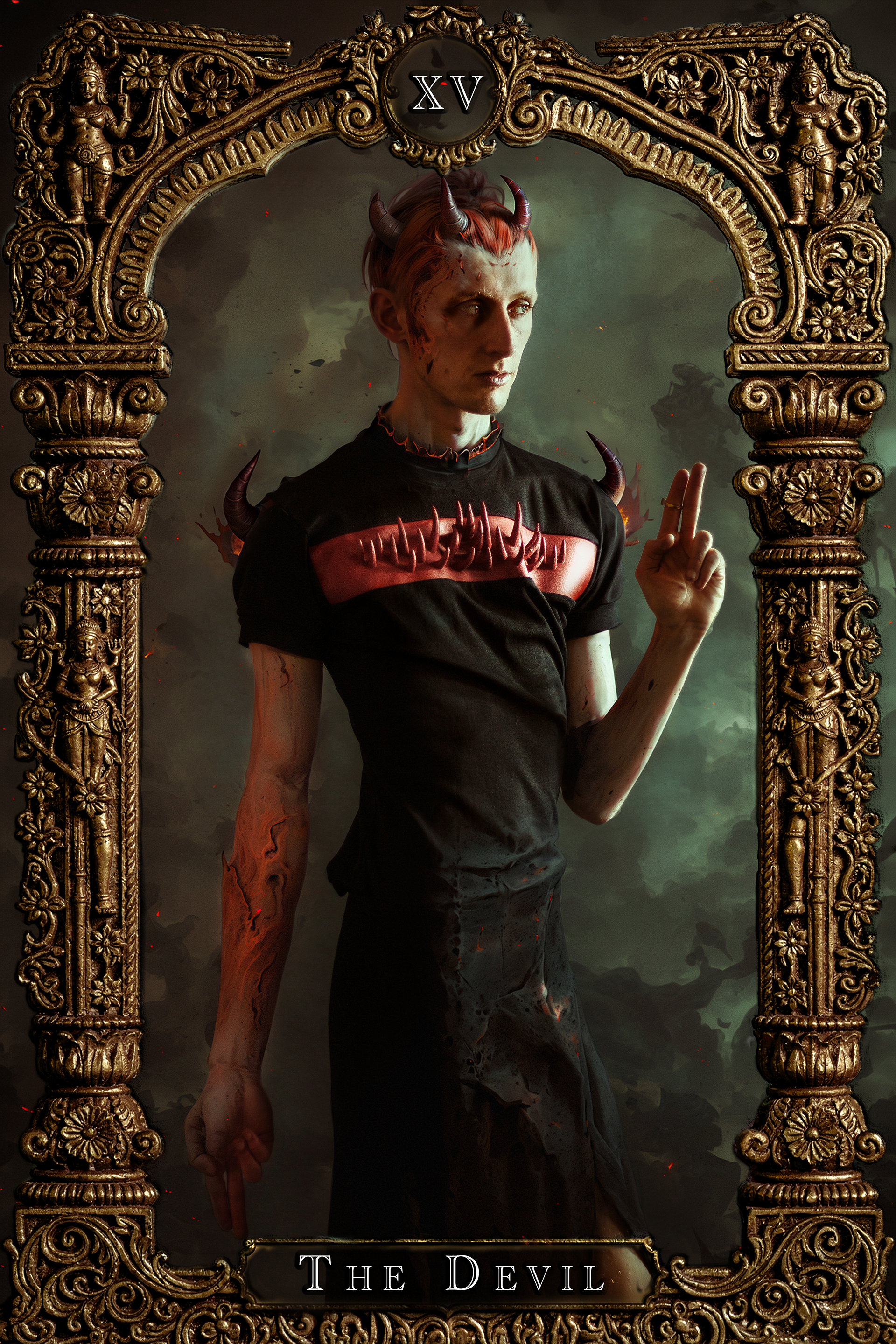
If you were given the key to your own cage, would you open the door, or would the fear of the unknown keep you chained?
We often paint the devil in the colours of external monsters—the temptor, the oppressor, the thief of our peace. Yet, if we look deeply into the silent, shifting shadows of our own psyche, we find that the chains binding us are forged not of iron, but of our own stubborn attachments to what we believe we need to be happy.
Like the figures in the Tarot, we stand in the presence of the shadow, draped in the illusion of restriction. It is a state of "complicit bondage." We stay because the known cage feels safer than the vast, terrifying freedom of the wild. To look at this image is to witness the moment the soul realises: the lock is on the inside, and the warden is, and has always been, the self.
True liberation begins when we stop blaming the dark and start acknowledging the light we’ve been dimming. It is the ecstatic surrender of the ego, the messy, beautiful act of realising that even in the deepest shadow, we are the architects of our own liberation.
We often paint the devil in the colours of external monsters—the temptor, the oppressor, the thief of our peace. Yet, if we look deeply into the silent, shifting shadows of our own psyche, we find that the chains binding us are forged not of iron, but of our own stubborn attachments to what we believe we need to be happy.
Like the figures in the Tarot, we stand in the presence of the shadow, draped in the illusion of restriction. It is a state of "complicit bondage." We stay because the known cage feels safer than the vast, terrifying freedom of the wild. To look at this image is to witness the moment the soul realises: the lock is on the inside, and the warden is, and has always been, the self.
True liberation begins when we stop blaming the dark and start acknowledging the light we’ve been dimming. It is the ecstatic surrender of the ego, the messy, beautiful act of realising that even in the deepest shadow, we are the architects of our own liberation.
ചങ്ങല അഴിക്കാൻ ആഗ്രഹമില്ലാത്തവൻ താൻ തടവുകാരനാണെന്ന് സ്വയം വിശ്വസിക്കുന്നു.
[He who does not desire to break the chains convinces himself he is a prisoner.]
The Moon
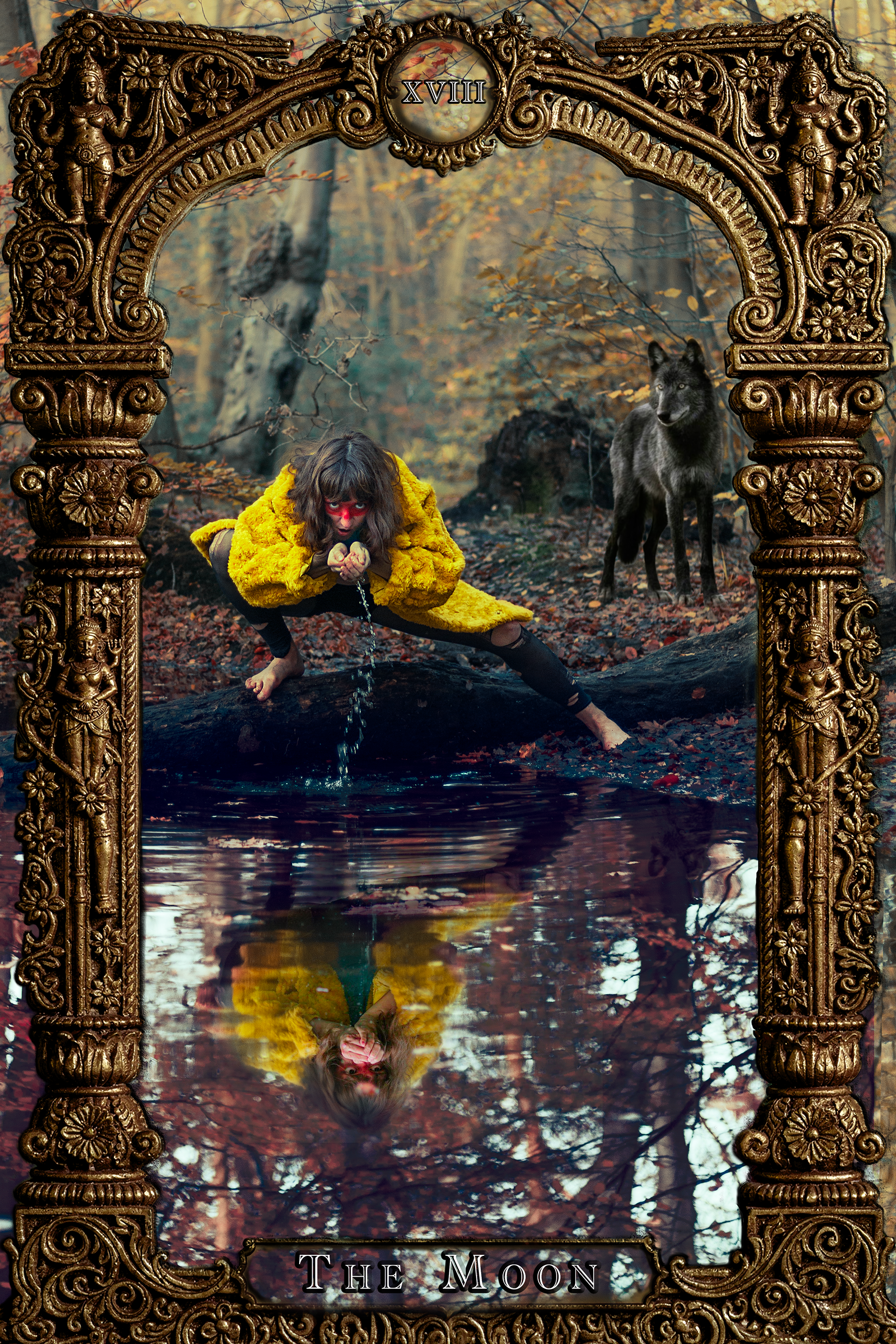
There is a wildness that cannot be tamed by the intellect; it is the "Prana" that flows beneath the surface of our civilised masks. Like the Moon card in the Tarot, this moment exists in the liminal space between the known and the unknown. We crouch at the water’s edge, not to drink, but to return what we have borrowed from the earth. The wolf behind is not a predator, but an ancient witness—the Atman watching the Ego struggle with its own reflection.
The water does not judge the distortion; it only carries the image. When we stop trying to still the surface, we finally see the depth.