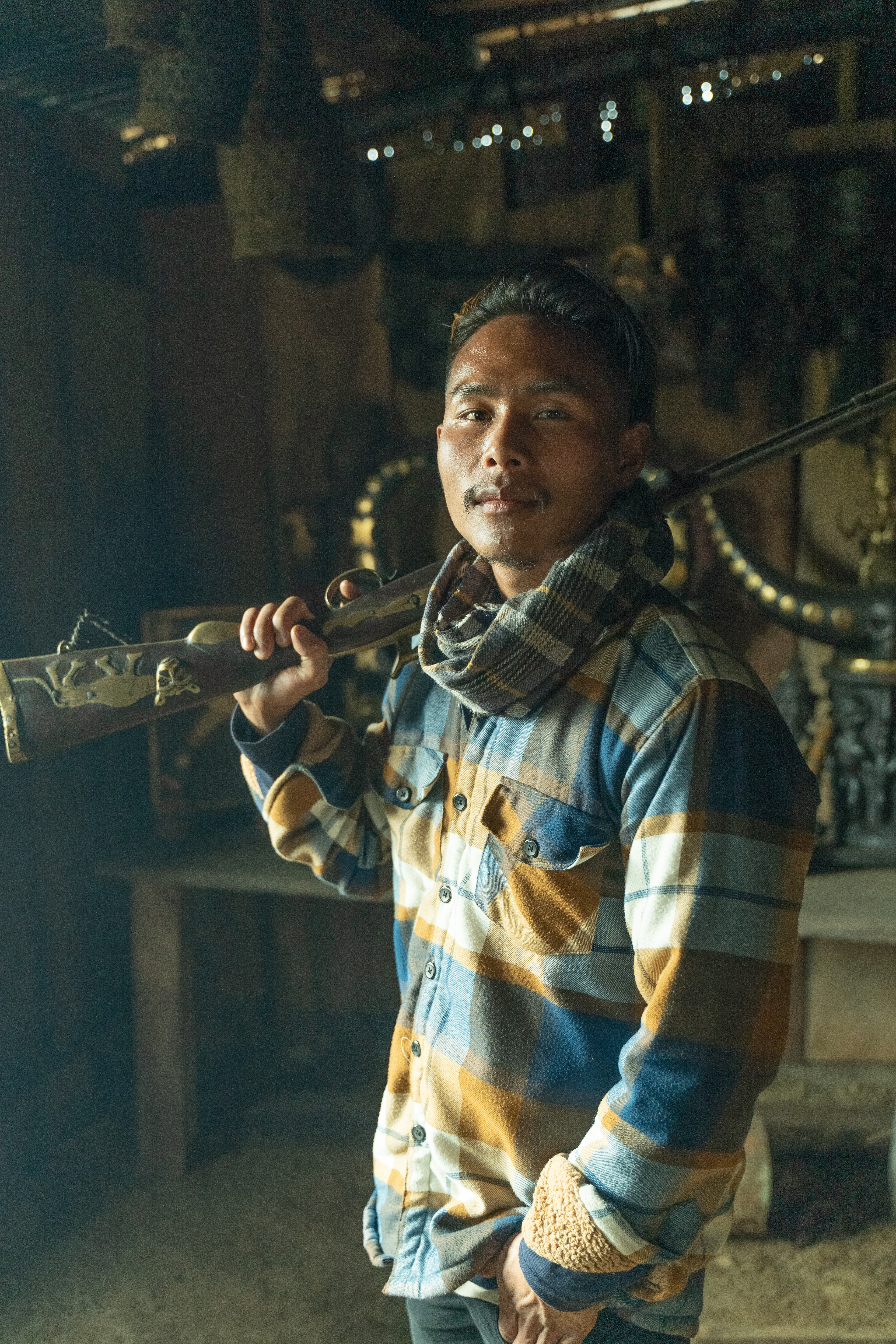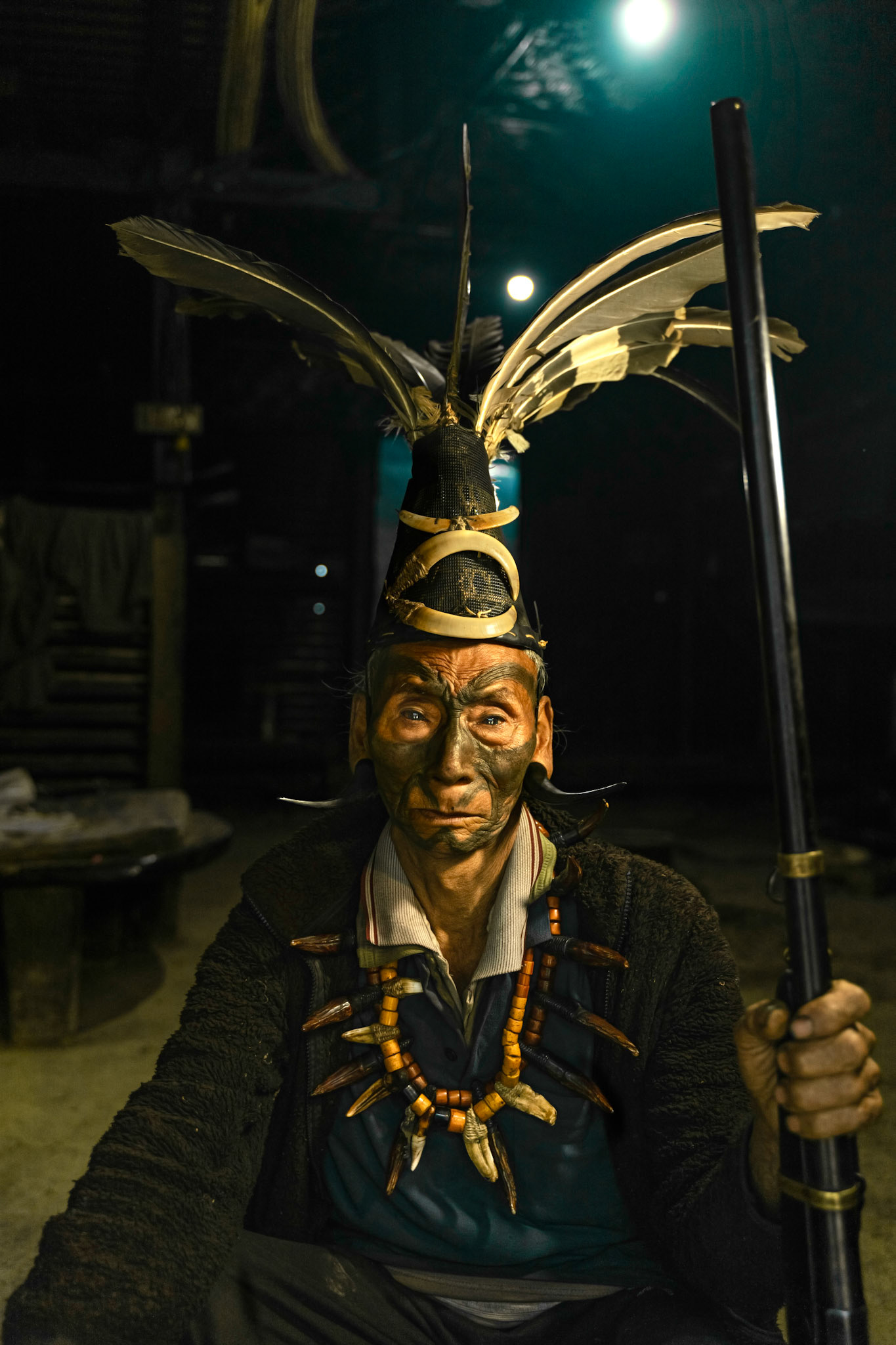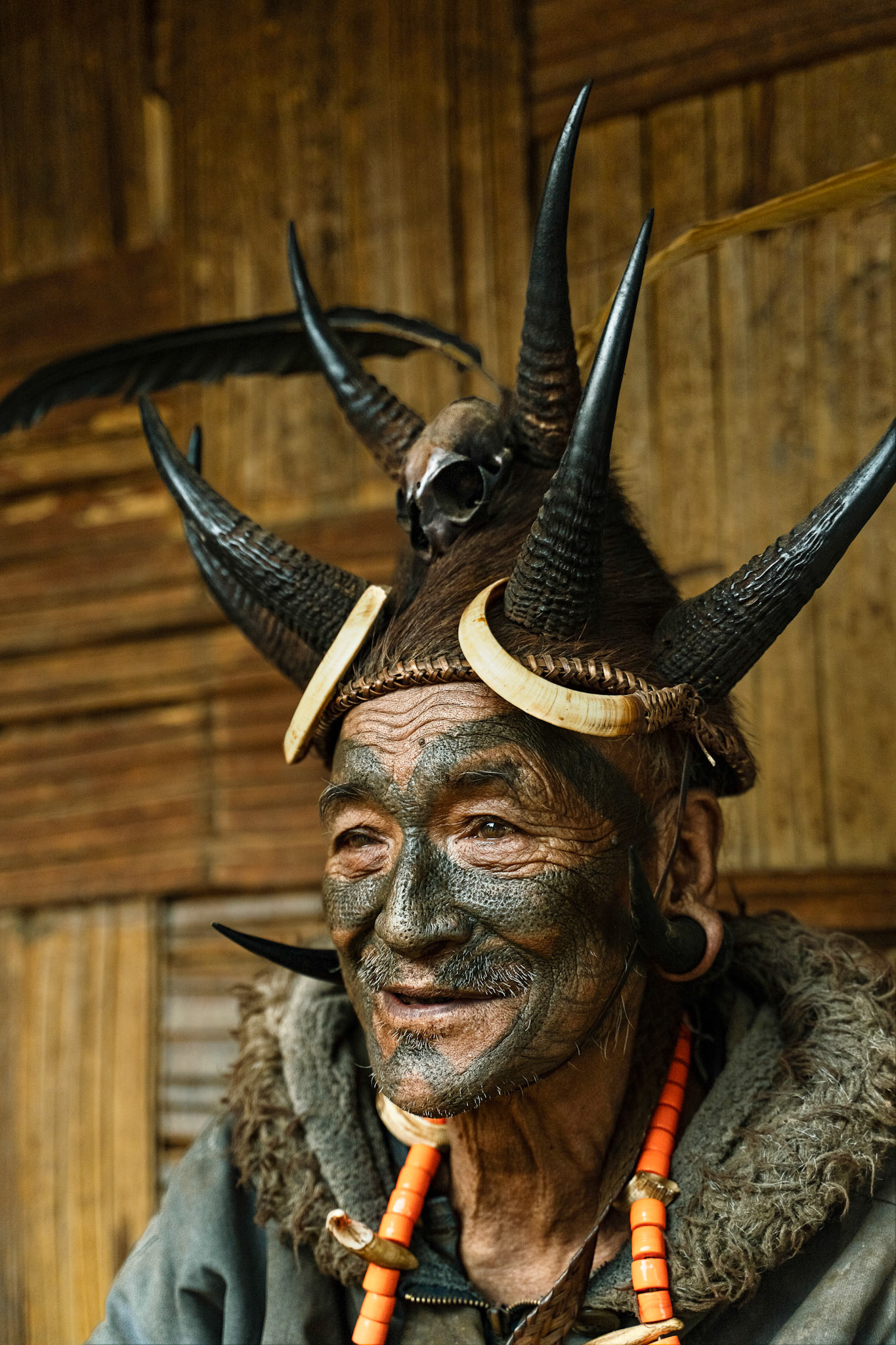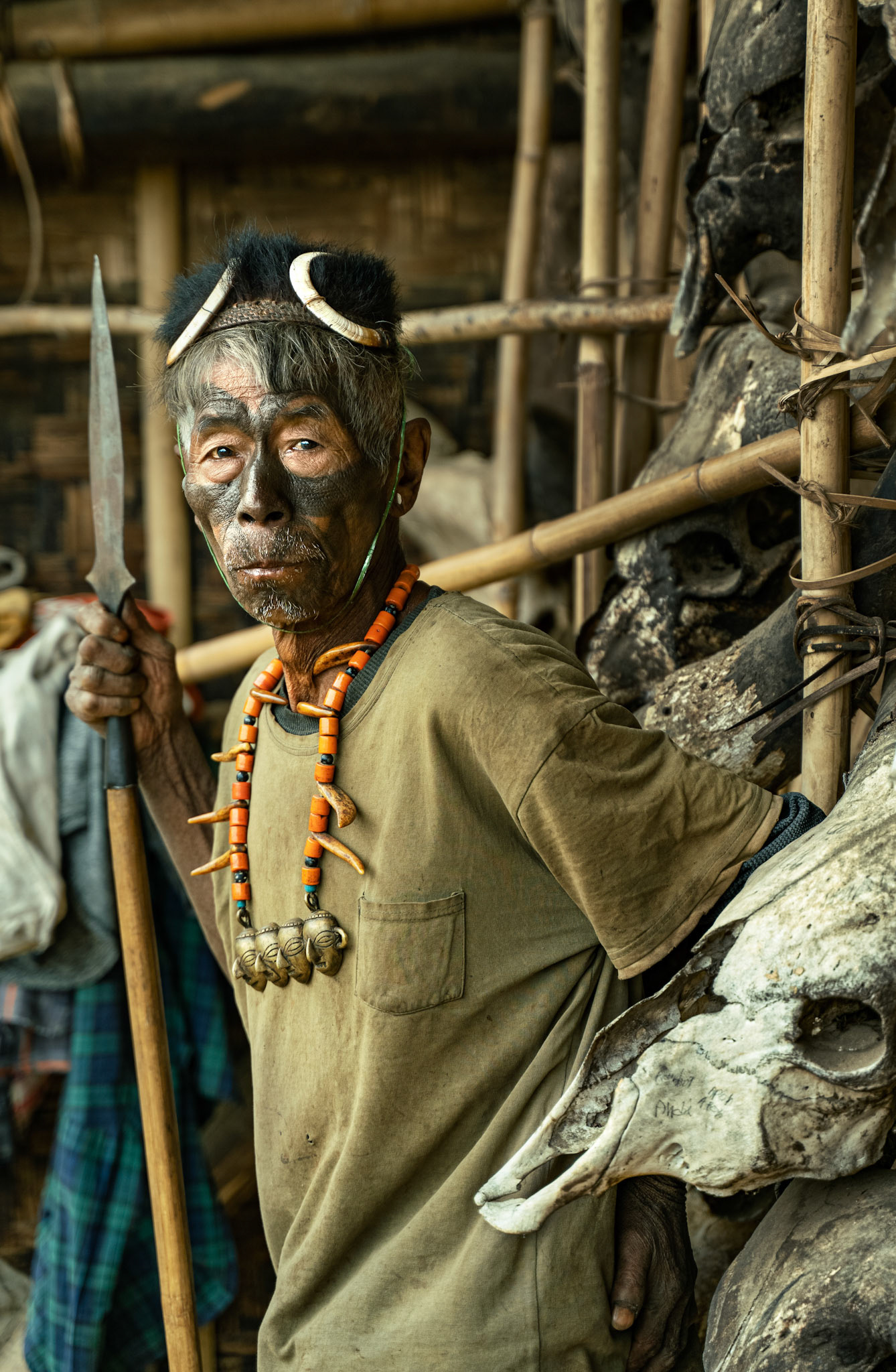
In the village of Longwa, the mist hangs heavy over the ridge, indifferent to the concrete pillar that marks where India ends and Myanmar begins. My grandfather, Wangkao, used to laugh at that pillar. "How can a stone tell a Konyak where his brother lives?" he would ask. But his laughter was dry, brittle like the dried palm leaves on our roof.
I live in the house of the *Angh* (the Chief), a long, sprawling wooden structure where the hearth lies in India but the sleeping quarters stretch into Myanmar. It is a fitting metaphor for our souls: split, displaced, and hovering between two worlds.
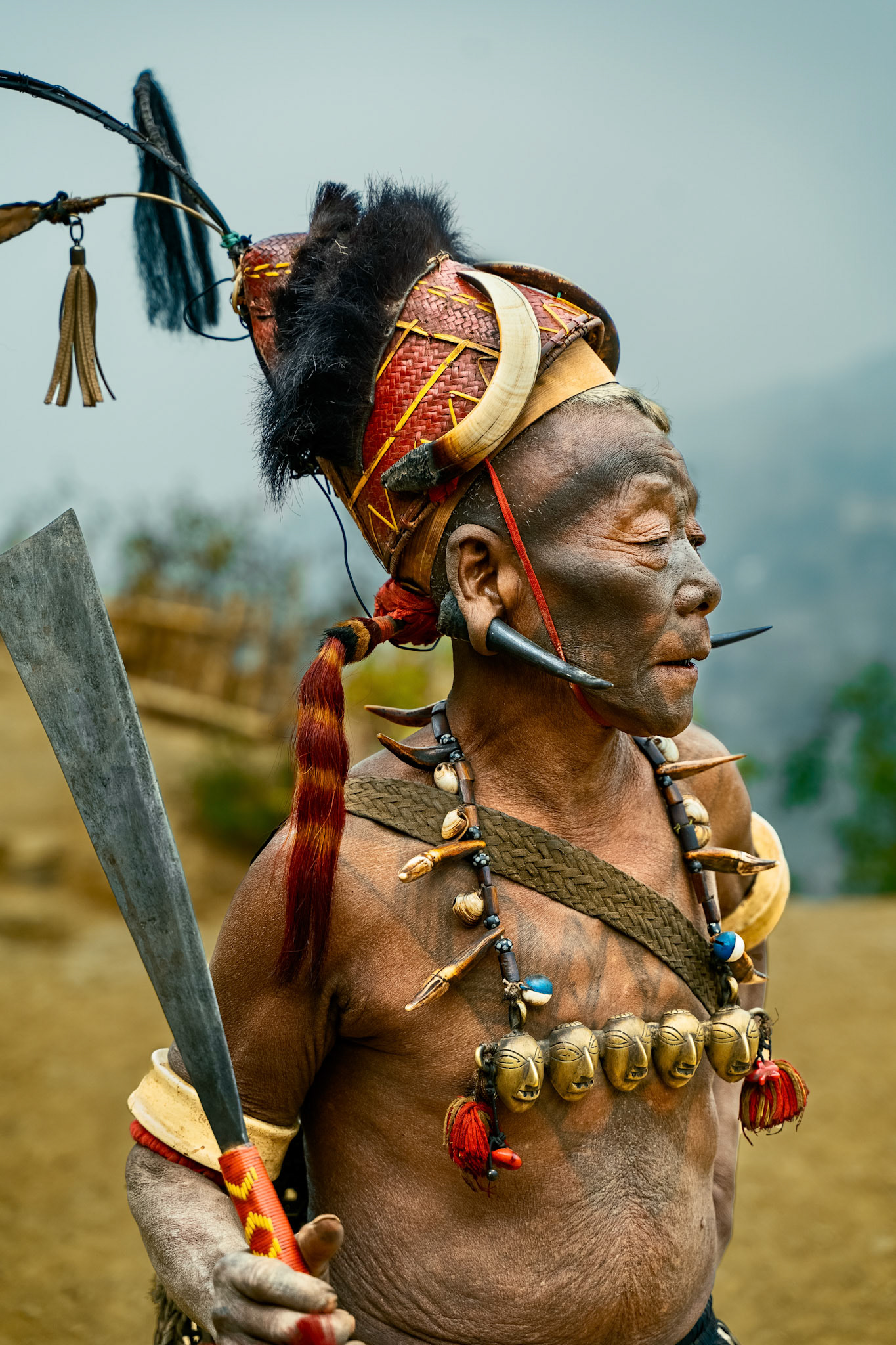
Wangkao was one of the last men to wear the brass skull necklace. His face was inked with the prestigious tattoos of a headhunter—geometric lines that curled across his cheeks and chin, marking him as a warrior who had taken a head in battle. In the old days, before the British drew their lines and the missionaries brought their Book, Longwa was a fortress of power. The Taking of the Head was not merely violence; it was a fertility rite. We believed the soul-force of the enemy brought prosperity to our fields and strength to the tribe. The *Morung* (bachelor's dormitory) was our university, where boys became disciplined men, learning the art of war, agriculture, and the intricate gunsmithing for which Longwa was famous.
Then came the twin forces of "civilization": the Empire and the Church.
The British, finding the hill tribes difficult to subdue with force, introduced a more insidious weapon: *Kani*—opium. They paid our chiefs in black tar to keep the peace for their tea gardens in the plains below. I remember watching my grandfather in his later years, the fire in his eyes dimmed not by age, but by the haze of the pipe. The British turned our warriors into addicts. They pacified us by breaking our will, and then they drew a border through our kitchen, severing our trade routes and isolating us from our kin in the Burmese jungles.
Then came the American Baptist missionaries in the mid-20th century. They arrived with medicine and education, which we desperately needed, but the cost was our identity. They told us that the skulls in the *Morung* were not symbols of bravery, but vessels of Satan. They told us our tattoos were marks of shame.
I was a child when the great burning happened. The missionaries and the new converts gathered the skull trophies—generations of accumulated power and history—and reduced them to ash. The *Morungs* were emptied. The log drums, which once thundered across the valleys to signal festivals or war, fell silent.
We were promised that if we laid down the *Dao* (machete) and picked up the Bible, we would enter a world of light and prosperity. We laid down the *Dao*. We stopped the raids. We embraced the new faith.
But the prosperity never came.
By declaring our culture "satanic," the new order destroyed our social fabric. The discipline of the *Morung* collapsed, leaving the youth directionless. Our traditional economy, based on barter and self-sufficiency, was replaced by a need for money we did not have. We were left in a vacuum. The Indian government, far away in Delhi, saw us only as a border security issue, not a people. We were left with the opium addiction introduced by the colonizers, but without the warrior discipline to resist it.
Today, Longwa is a paradox. Tourists come in jeeps to take photos of the "Last Headhunters." They shove cameras in the face of my grandfather’s peers, paying a few rupees to capture the fading tattoos on their wrinkled skin. We have become a human zoo.
We are Christians now, and we pray for our daily bread, but the granaries are often empty. The gunsmiths of Longwa, once the finest in the hills, are now looked upon with suspicion. We have no industries, no high schools, and the road to the district headquarters is a river of mud. The opium that pacified our grandfathers still grips our sons, a generational curse we cannot shake.
We traded our pride for a promise of salvation, and in return, we received poverty. We are the Konyaks of Longwa—citizens of two countries, but masters of neither. We have ceased to be headhunters, but in the quiet of the night, when the mist rolls in, we wonder if we have also ceased to be Konyaks.